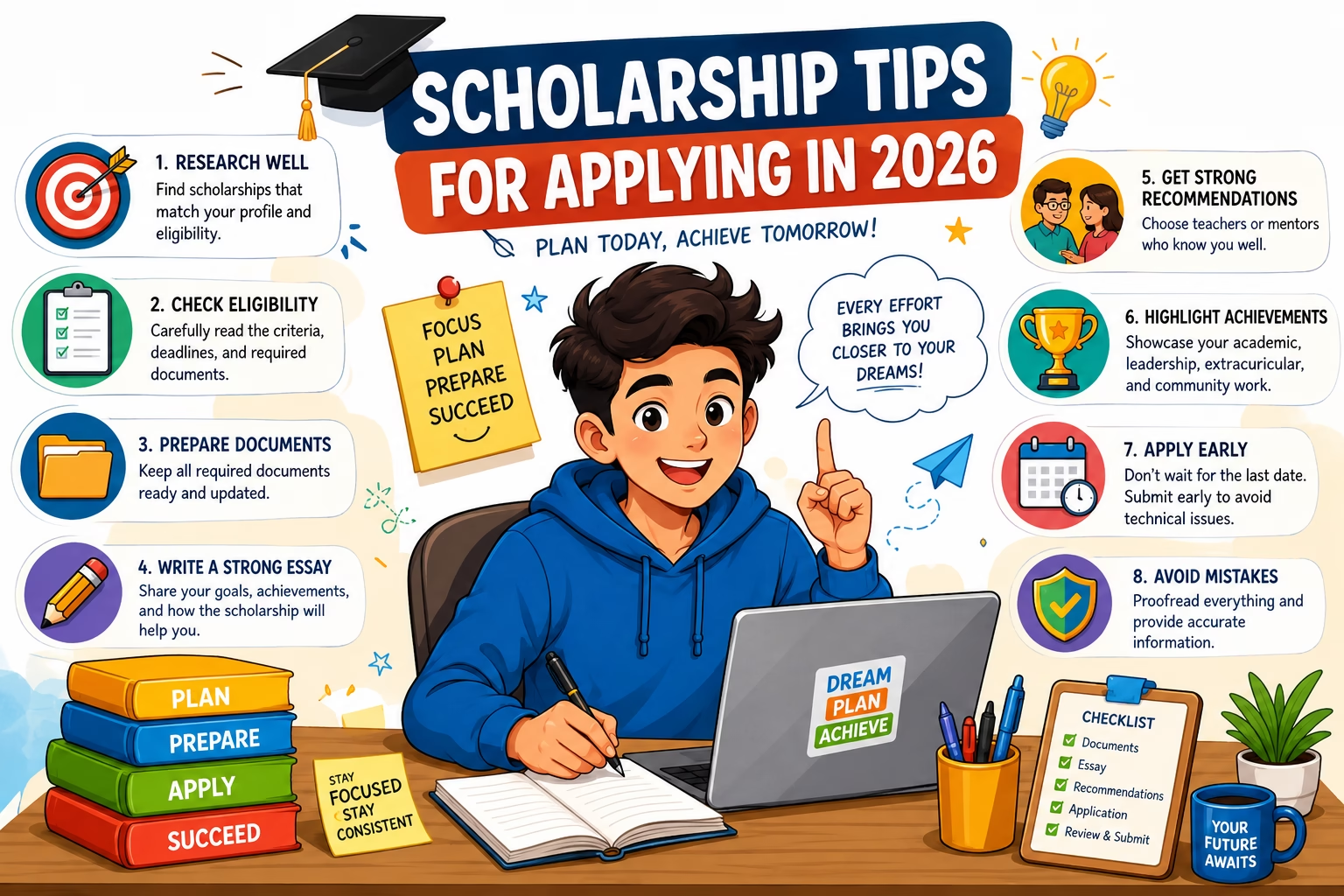
1. Start Your Scholarship Preparation Early
The best time to start is 3–6 months before applications open.
Create a Scholarship Folder
Prepare digital and physical copies of:
- Aadhaar Card
- PAN Card (if applicable)
- Passport-size photograph
- Signature
- Income Certificate
- Caste Certificate (if applicable)
- Domicile Certificate
- Birth Certificate
- Previous year’s marksheets
- Bonafide Certificate
- Admission Letter
- Fee Receipt
- Bank Passbook (Aadhaar-linked)
- Disability Certificate (if applicable)
- Sports/NCC/NSS certificates
- Achievement certificates
2. Research the Right Scholarships
Do not apply randomly.
Apply to scholarships that match your profile.
Look for:
- Government Scholarships
- State Scholarships
- Private Scholarships
- Corporate CSR Scholarships
- NGO Scholarships
- University Scholarships
- International Scholarships
Many scholarship reviewers note that applicants who fit the scholarship’s purpose tend to perform better than those submitting generic applications.
3. Check Eligibility Carefully
Always verify:
- Academic percentage
- Family income limit
- Age limit
- Course eligibility
- College recognition
- State eligibility
- Category requirements
- Renewal conditions
Even one mismatch can lead to rejection.
4. Never Wait Until the Last Date
Many portals become slow or inaccessible near deadlines.
Apply at least one week before the closing date.
5. Keep Every Document Updated
Common reasons for rejection include:
- Expired income certificate
- Wrong IFSC code
- Blurred documents
- Incorrect Aadhaar details
- Name mismatch
- Wrong category selection
Double-check every uploaded file.
6. Use the Same Name Everywhere
Your name should match exactly across:
- Aadhaar
- Bank account
- School records
- College records
- PAN
- Scholarship portal
Even minor spelling differences can delay verification.
7. Link Your Aadhaar with Your Bank Account
Most government scholarships are paid through Direct Benefit Transfer (DBT) into Aadhaar-linked bank accounts. Ensure your account is active and correctly linked.
8. Write an Outstanding Scholarship Essay
Many scholarships require:
- Statement of Purpose (SOP)
- Personal Statement
- Essay
A strong essay should include:
- Your background
- Financial need
- Academic achievements
- Career goals
- Community impact
- Why you deserve the scholarship
- How the scholarship will help you
Avoid copying essays from the internet.
9. Build a Strong Resume
Include:
- Academic achievements
- Internships
- Projects
- Volunteer work
- Leadership roles
- Sports
- Cultural activities
- Certifications
- Awards
- Skills
Keep it concise and professional.
10. Obtain Strong Recommendation Letters
Choose referees who know your work well, such as:
- Principal
- Professor
- Teacher
- Project Guide
- Employer (if applicable)
Request the letter early so it can be tailored to the scholarship.
11. Showcase Leadership
Scholarship committees often value:
- Organizing events
- Social work
- Community service
- Student council
- NSS
- NCC
- NGO activities
12. Highlight Your Achievements
Mention:
- Olympiads
- Competitions
- Hackathons
- Research papers
- Sports
- Cultural awards
- Entrepreneurship
- Startups
- Certifications
13. Maintain Good Academic Performance
While many scholarships also consider financial need and leadership, consistent academic performance remains a major selection factor.
14. Keep a Scholarship Tracker
Use a spreadsheet with columns such as:
| Scholarship | Deadline | Status | Documents | Result |
|---|---|---|---|---|
| NSP | 31 Oct | Submitted | Complete | Pending |
| Private Scholarship | 15 Aug | In Progress | Pending | — |
This helps prevent missed deadlines and duplicate work.
15. Apply to Multiple Scholarships
Do not rely on a single opportunity.
Aim for:
- 20–50 scholarships each year (where eligible)
This improves your overall chances.
16. Proofread Everything
Before submitting, check:
- Grammar
- Spelling
- Dates
- Names
- Bank details
- Income figures
- Contact information
17. Beware of Scholarship Scams
Never:
- Pay an application fee unless it is clearly part of an official admission process.
- Share OTPs or passwords.
- Upload documents to suspicious websites.
Use official government portals and reputable organizations.
18. Keep Your Contact Details Active
Ensure your:
- Mobile number
- Email address
- Bank account
remain active throughout the application cycle.
19. Respond Quickly
Some scholarships request:
- Additional documents
- Verification
- Interviews
Respond promptly to avoid cancellation.
20. Prepare for Scholarship Interviews
Common questions include:
- Tell us about yourself.
- Why do you deserve this scholarship?
- What are your career goals?
- Why this course?
- What are your strengths?
- What financial challenges do you face?
- How will you contribute to society?
Practice speaking confidently and honestly.
21. Build a Strong Profile Throughout the Year
Develop:
- Volunteer experience
- Online certifications
- Coding skills
- Public speaking
- Research projects
- Leadership experience
- Communication skills
These strengthen future applications.
22. Use Official Scholarship Portals
For students in India, start with official government portals and your state scholarship portal. The National Scholarship Portal (NSP) remains one of the primary platforms and requires One Time Registration (OTR) for new applicants.
Top Mistakes to Avoid
- Applying on the last day
- Uploading blurry documents
- Using copied essays
- Ignoring eligibility rules
- Entering incorrect bank details
- Missing verification steps
- Not tracking application status
- Failing to renew scholarships on time
- Applying without reading the guidelines
Scholarship Success Checklist (2026)
✅ Read the complete guidelines
✅ Check eligibility
✅ Prepare all documents
✅ Write a personalized essay
✅ Get recommendation letters
✅ Verify bank and Aadhaar details
✅ Submit early
✅ Save the application receipt
✅ Track your application regularly
✅ Respond to any verification requests promptly
Final Advice
Scholarships are often awarded to students who are well-prepared, organized, and able to clearly demonstrate both merit and need. Start early, apply only where you are eligible, customize every application, and keep accurate records. Consistent effort across multiple applications usually yields better results than relying on a single scholarship.